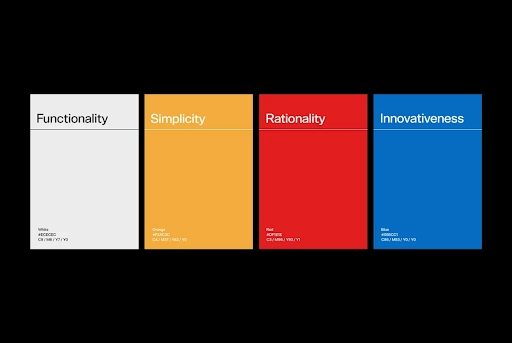

2025 wasn’t just a year of change. It was a year of correction. Organizations stopped chasing more and started chasing better. Talent, work, and long-term growth moved from volume-driven choices to quality-driven decisions. Hiring shifted from filling seats to strengthening resilience, improving adaptability, and raising performance.
Across industries, leadership priorities changed as markets tightened, technology advanced, and employee expectations evolved. These shifts revealed clear patterns that shaped the year and will continue to guide decisions in the months ahead.
The Death of "Panic Hiring": Why We Finally Ditched Speed for Density
In early 2025, many organizations were still coming off a growth-at-all-costs mindset, pushing rapid hiring to meet short-term demand. By midyear, the limits of that approach were clear. Time to fill shifted from a success metric to a liability, rewarding speed over real problem-solving.
The real shift in 2025 was not simply a renewed focus on quality. It was a move toward performance density. Recruitment stopped being a volume exercise and became a precision function. Teams began breaking down the true business need behind each role. It was no longer about hiring a Java developer. It was about finding someone who could solve defined problems and deliver measurable outcomes within six months.
As technical requirements changed at record speed, static skills lists quickly lost relevance. Adaptability and problem-solving emerged as the most reliable indicators of long-term value. Hiring shifted away from who a candidate was on day one and toward who they could grow into over time.
The market also delivered a clear warning. A fast hire without role clarity costs far more than leaving a seat open. When organizations prioritized clear expectations and long-term fit over speed, they reduced the churn that had stalled teams in prior years.
The "Human-in-the-Loop" Correction: AI’s Sobering Up Moment
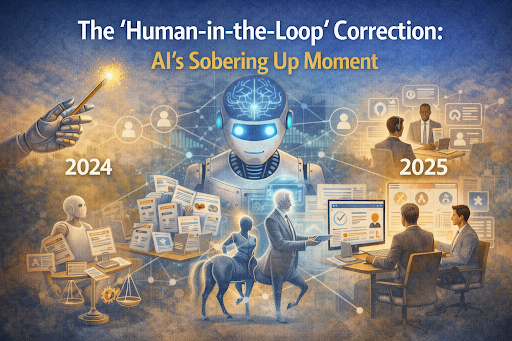
If 2024 was the year of AI experimentation, 2025 was the year of AI correction. We moved past the "magic wand" phase and faced the operational reality: AI is an incredible accelerator, but a terrible decision-maker.
The most successful teams didn't use AI to replace recruiters; they used it to liberate them from administrative purgatory.
Operationalizing Efficiency, Not Judgment: We saw AI mature into a workhorse for data-heavy tasks like resume parsing and initial skills assessments. This wasn't about automation for its own sake; it was about reclaiming thousands of hours previously lost to screening, allowing recruiters to reinvest that time in high-value candidate interactions.
The Bias Trap & The Human Fix: While tools for workforce insights and screening gained traction, we also learned that unsupervised algorithms can amplify bias just as fast as they process data. The winning strategy in 2025 was the "Centaur" approach: AI provides the data, but human judgment makes the call.
From Novelty to Utility: The "buzzword" era ended when we stopped asking "What can AI do?" and started asking "Does this actually help us make a better hire?". The result was a grounded, sustainable approach where technology supported the process rather than hijacking it.
The Internal Talent Marketplace: Why Retention Became the New Recruitment
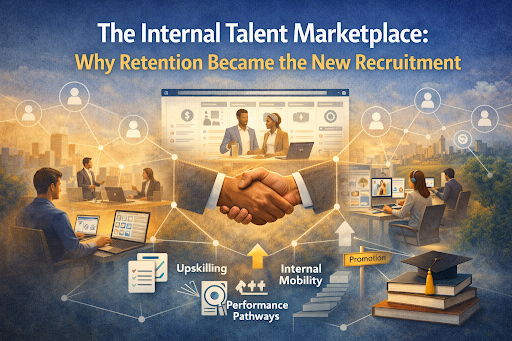
In 2025, the most critical talent pipeline wasn’t LinkedIn. It was the internal talent marketplace powered by an organization’s own learning systems. As the cost of turnover became impossible to ignore, companies shifted focus from constant external hiring to developing and retaining the people they already had.
Employees looked for clarity, real growth paths, and leadership they could trust. Organizations responded by investing in upskilling, internal mobility, and defined performance pathways. Learning moved from aspirational programs to role-specific development tied directly to outcomes. Retention stopped being an HR metric and became a core growth strategy.
Flexibility: From Where We Work to How We Trust
In 2025, flexibility stopped being about location and became about trust. The focus shifted from where people worked to how teams were supported, measured, and held accountable. One-size policies gave way to approaches shaped by role requirements, team dynamics, and business goals.
Some roles returned to hybrid or in-person models, while others remained remote. Teams performed better when expectations were clear and decisions were explained. Flexibility became a standard way of working built on transparency, ownership, and trust rather than a perk defined by geography.
Leadership in a Changed Playbook
The playbook has changed. 2025 made it clear that steady leadership is no longer optional. Teams needed clarity, presence, and context, especially during moments of uncertainty. Leaders who communicated with intent, listened closely, and made deliberate decisions earned trust and sustained performance. When people understood not just what was expected, but why it mattered, alignment followed.
Looking Ahead to 2026
2026 demands a different kind of leader. One who chooses clarity over chaos, discipline over reaction, and long-term strength over short-term gains. The opportunity is real, but it comes with a challenge. Are you building teams for speed or for staying power? Are your leaders equipped to guide through complexity, or are they managing through habit?
If you are planning for 2026, this is the moment to reset how you attract, develop, and lead talent. The teams that win next year will be shaped by decisions made now. If you are ready to build leadership and talent systems that hold up under pressure, let’s talk.